Fractional Executive Leadership · Mission-Driven Organizations

Your organization deserves executive leadership that actually shows up.

I do not just hand you a strategy deck and disappear. I work alongside your team — building the systems, leading the campaigns, and driving the results that move your mission forward.

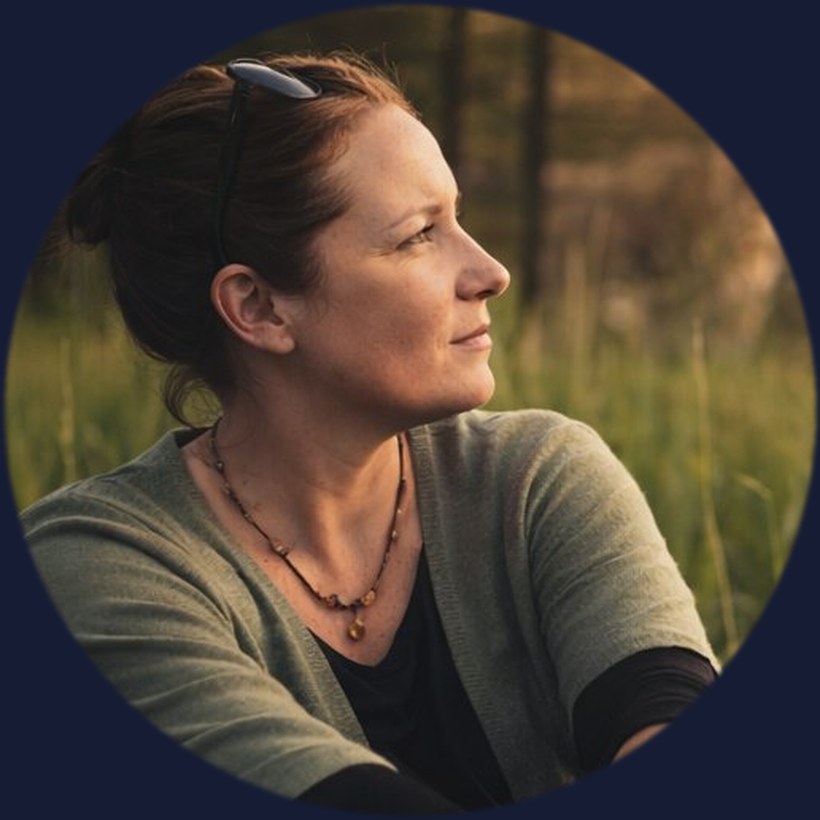
Keira Haley
$130M+ Campaigns Led
500% Revenue Growth Achieved
20+ Years of Executive Experience
25+ Team Members Led
Organizations Served
Keira Haley
About Keira

I have spent 20 years inside the rooms where the hard decisions get made.

I know what it feels like when your organization has more mission than capacity — and I know exactly how to close that gap.

Whether I am stepping in as your Chief Development Officer to rebuild a fundraising operation from the ground up, serving as Chief of Staff to your CEO, or strengthening your operations as a COO, I bring the full weight of senior executive experience — without the full-time price tag.

"I do not hand you a plan and leave. I stay in it with you — building systems that work after I am gone, teams that are stronger for the work we did together, and results that speak for themselves."

My work has taken me across healthcare, higher education, conservation, and animal welfare — which means I bring perspective other consultants simply do not have. Cross-sector thinking is not a talking point for me. It is how I work.

$130M+ Campaigns Led
500% Revenue Growth
25+ People Led
20+ Years
How I Help

Senior fractional leadership, exactly when you need it

Available as a fractional CDO, Chief of Staff, or COO — senior executive capacity without the full-time commitment. Every engagement is tailored: no templates, no off-the-shelf solutions, just clear-eyed strategy and hands-on execution built around your organization's specific moment.

01

Chief Development Officer

Your fundraising is not underperforming because your mission is weak. It is underperforming because it needs the right leadership.

  • Campaign planning & execution
  • Major gifts & donor relations
  • Advancement operations & CRM systems
  • Team leadership & development
02

Chief of Staff

Your CEO should be focused on vision and relationships — not putting out fires. That is where I come in.

  • Executive advisory & decision support
  • Board liaison & governance support
  • Strategic initiative management
  • Stakeholder engagement & alignment
03

Chief Operating Officer

Great strategy fails without the operational infrastructure to support it. I build the systems that make your work sustainable.

  • Organizational strategy & planning
  • Process improvement & efficiency
  • Change management & transformation
  • Performance metrics & accountability
What Makes This Different

I have been in the room. I know what actually works.

Board-Tested Leadership

I have served on executive leadership teams, acted as trustee liaison, and advised CEOs and boards through some of their most complex moments. I know how boards think — and how to work with them effectively.

I Build, I Do Not Just Advise

The difference between a consultant and a fractional executive is that I am accountable for outcomes. I do not deliver recommendations from a distance — I build the CRM systems, lead the team, close the gifts, and drive the results.

Cross-Sector Intelligence

Healthcare. Higher education. Conservation. Animal welfare. Social impact. Most executives live in one world. I have led inside all of them — which means I bring patterns and solutions that sector-specific leaders simply cannot see.

Results You Can Point To

500% revenue growth. $130M in campaigns led. 25-person teams built. These are not estimates — they are documented outcomes from real organizations navigating real challenges. The proof is in the work.

Proven Results

The work speaks for itself.

Real organizations. Measurable outcomes. Lasting impact.

Campaign Leadership

Boys & Girls Clubs of Boston

$125M+

Led the senior advancement team through a comprehensive campaign that exceeded its goal. Partnered with trustees and volunteer leadership to advance major and planned gifts while sustaining campaign momentum through complexity.

Campaign Strategy Major Gifts Board Engagement
Revenue Transformation

FOUR PAWS USA

500%+

As Chief Development Officer, rebuilt the entire fundraising operation. Digital revenue grew 183% year-over-year. Overall revenue grew more than 500%. This is what happens when you combine the right strategy with real execution.

Digital Transformation Revenue Growth Team Leadership
Executive Leadership

Emerson College

$9M

Stepped in as Interim VP of Development & Alumni Relations, joined the President's executive leadership team, and served as Board of Trustees liaison — all while leading a 25-person team and launching a $5M mini-campaign that secured two seven-figure gifts.

Interim Leadership Executive Advisory Campaign Launch
Operations Transformation

Wentworth Institute

$10M

Led the full institutional advancement operation — alumni relations, communications, and major giving — while modernizing systems and processes that had held the organization back. Nearly $10M raised while building infrastructure that lasted.

Systems Modernization Process Improvement Team Development
How We Start

Simple. Clear. No pressure.

Every engagement begins with an honest conversation about whether this is the right fit — for both of us.

1

Discovery Call — 30 Minutes

We talk about where your organization is, what is working, what is not, and what leadership could unlock. No agenda, no pitch — just an honest conversation. If there is a fit, we both know.

2

Tailored Scope & Proposal

If it is a mutual fit, I develop a scope of work built specifically around your organization's priorities — not a template, not a one-size-fits-all package. Clear deliverables, clear timelines, clear investment.

3

Partnership Launch

We establish shared objectives, success metrics, and how we will work together day-to-day. Then we get to work — with full focus, full accountability, and a commitment to results that matter to your mission.

Insights

Thinking out loud on leadership, fundraising, and mission.

Perspectives from the field — for nonprofit leaders navigating real challenges in real time.

Fundraising January 2026

The Case for Fractional CDO Leadership in a Staffing Crisis

Nonprofit fundraising shops have been gutted by turnover — and the traditional response of hiring a permanent CDO is taking 6 to 12 months that most organizations cannot afford. Here is why fractional leadership is not a stopgap. It is often the better choice.

Read More
Operations December 2025

Five Signs Your Nonprofit Has Outgrown Its Infrastructure

Revenue is growing, the team is expanding, and somehow things feel harder than they did when you were smaller. You have not done anything wrong — you have just hit the wall that every scaling organization hits. Here is how to recognize it and what to do next.

Read More
Leadership November 2025

What I Learned Leading a 25-Person Team Through a Capital Campaign

The hardest part of a major campaign is not the donors. It is keeping your team energized, focused, and aligned through 18 months of pressure. Here are the lessons I took from the field — the ones they do not teach in CFRE prep courses.

Read More

Want these perspectives in your inbox?

Get in Touch →
← Back to Insights

Why Your Board Is Not Giving — And What Leadership Can Actually Do About It

Every nonprofit CEO has had the conversation: trustees who are not hitting their give-or-get minimums, board members who feel disconnected from the campaign, and a development team that is quietly avoiding the subject.

The problem is almost never the board. It is the infrastructure — and the relationships — that surround them. After two decades working inside some of the most complex advancement operations in the country, I can tell you with confidence: board giving is a leadership problem, not a board problem.

The relationship comes before the ask

Most development shops treat board engagement as a transactional exercise. They send quarterly updates, invite trustees to events, and then call when it is time to give. That sequence is backwards. The ask is not a moment — it is the outcome of a relationship that has been built over months or years. When boards are not giving, it is almost always because the relationship was never built in the first place.

This is where a Chief Development Officer or Chief of Staff earns their keep. Their job is not to manage the board — it is to create the conditions where board members feel genuinely connected to the mission, proud of the organization's work, and confident that their gift will make a real difference.

Staff behavior shapes board culture

Board members take their cues from staff. If your development team is uncomfortable making asks, your board will sense it. If your CEO avoids the topic of board giving, your trustees will too. The culture of generosity inside your board begins with the culture of candor inside your leadership team.

One of the first things I do when I step into a new engagement is sit down with the CEO and ask a simple question: when did you last have a direct, honest conversation with each trustee about their giving? In most cases, the answer reveals the real problem immediately.

What actually moves the needle

Three things, consistently: individual conversations that connect each board member to the specific impact of their gift; clear and transparent giving expectations communicated at the time of board recruitment, not after; and a CEO who models the behavior by talking openly about the importance of board generosity with their own trustees.

None of this is complicated. But it requires leadership that is willing to have the uncomfortable conversations — and the operational infrastructure to support them.

Want to talk through your board engagement strategy?

Schedule a Discovery Call →
← Back to Insights

The Case for Fractional CDO Leadership in a Staffing Crisis

Nonprofit fundraising shops have been gutted by turnover — and the traditional response of hiring a permanent CDO is taking 6 to 12 months that most organizations simply cannot afford.

The search alone costs time, energy, and money. Meanwhile, your campaign stalls. Your major donor relationships go cold. Your team loses confidence. And when the new CDO finally arrives, they need another 90 days to get oriented before they can lead anything.

The math does not work anymore

The traditional full-time CDO model made sense when the nonprofit sector was more stable. Today, with average tenure for development professionals at under two years and search timelines stretching to nearly a year, organizations cannot afford to operate in leadership limbo every time a key executive departs.

Fractional leadership is not a compromise — it is often the better choice. A fractional CDO steps in immediately, brings a track record of outcomes, and does not require the onboarding runway of a new hire. From day one, they are leading.

What fractional actually means

Fractional does not mean part-time or part-committed. It means senior executive capacity deployed on a flexible basis. A fractional CDO attends your leadership team meetings, manages your development staff, leads your donor relationships, and drives your campaign — just without a permanent employment contract.

For organizations in transition, this is frequently the right model. It gives you the leadership you need right now, while you take the time to make the right permanent hire — or decide that fractional is actually your long-term answer.

When it works best

Fractional CDO leadership works best when an organization has a clear fundraising challenge, a defined timeframe, and a CEO who is genuinely ready to partner with a senior leader. It is not a fit for every situation — but when the conditions are right, the results can be transformational.

Curious if fractional leadership is right for your organization?

Schedule a Discovery Call →
← Back to Insights

Five Signs Your Nonprofit Has Outgrown Its Infrastructure

Revenue is growing, the team is expanding, and somehow things feel harder than they did when you were smaller. You have not done anything wrong — you have just hit the wall that every scaling organization hits.

I have seen this pattern dozens of times. An organization builds real momentum, raises its profile, and starts attracting larger gifts and more complex partnerships. And then, almost imperceptibly, the systems that once worked start to crack.

Sign 1: Your CRM is not trusted

When your development team stops entering data consistently because the system is too cumbersome or too outdated, you have a foundational problem. A CRM that is not trusted is worse than no CRM at all — it creates a false sense of security while your donor relationships silently deteriorate.

Sign 2: Onboarding new staff takes too long

If it takes a new development officer three to six months to become productive, your institutional knowledge is not documented — it is living in people's heads. That is a fragility, not a feature. When those people leave, the knowledge leaves with them.

Sign 3: Your reporting is always late or contested

When the board asks for a campaign update and your team spends two days pulling numbers from three different spreadsheets, you do not have a reporting problem. You have a systems problem. Good infrastructure makes reporting easy. Poor infrastructure makes it painful.

Sign 4: Your CEO is doing development work

When the CEO is personally managing donor relationships because there is no one else with the capacity or seniority to do it, the organization has a leadership gap — not a personnel gap. Senior executive support for the CEO is what closes it.

Sign 5: Growth feels chaotic

Growth should feel energizing, not exhausting. When every new initiative requires heroic effort from the same small group of people, the problem is structural. The answer is not to work harder — it is to build the infrastructure that makes scale sustainable.

Ready to build infrastructure that supports your growth?

Schedule a Discovery Call →
← Back to Insights

What I Learned Leading a 25-Person Team Through a Capital Campaign

The hardest part of a major campaign is not the donors. It is keeping your team energized, focused, and aligned through 18 months of sustained pressure.

I have led teams through capital campaigns at Boys & Girls Clubs of Boston, Emerson College, and several other complex organizations. Each one taught me something new. But a few lessons have shown up consistently enough that I now treat them as fundamentals.

Clarity beats inspiration every time

At the start of a campaign, leaders often focus heavily on mission and motivation — and that matters. But what your team needs more than inspiration is clarity: who is responsible for what, how success will be measured, and what decisions they are empowered to make without escalating. Ambiguity is exhausting. Clarity is energizing.

Protect your people from the board

This sounds counterintuitive, but it is one of the most important jobs a CDO has during a campaign. Board members are not always aware of how their direct interactions with development staff can create confusion, undermine authority, or generate extra work. Part of your role is to create a buffer that lets your team focus on execution while you manage the board relationship.

Celebrate progress, not just outcomes

In an 18-month campaign, waiting until the end to celebrate means your team goes most of the journey without acknowledgment. Build in deliberate moments to recognize progress — a gift at the halfway mark, a team dinner after a major close, a personal note when someone lands their first seven-figure conversation. These moments matter more than most leaders realize.

The campaign ends before the campaign ends

The last three months of a capital campaign are operationally brutal. Reporting intensifies, events multiply, and the pressure to close outstanding pledges dominates everything. If you have not built the systems and the team capacity to handle this phase before it arrives, you will spend those months in crisis mode. Plan for the end from the beginning.

Navigating a campaign and want a thought partner?

Schedule a Discovery Call →
Let's Talk

Your mission is too important to wait for the right leadership.

If you are navigating a campaign, a leadership gap, or an operational challenge — and you need someone who has been there before — let us talk.

A discovery call is 30 minutes, completely free, and zero pressure. The worst that happens is you leave with a clearer picture of what you need.

Currently accepting select engagements

Typical engagement: 6–12 months · 15–30 hours/week · Starting immediately

📧 [email protected]

📍 Sharon, MA · Greater Boston

Schedule a Discovery Call